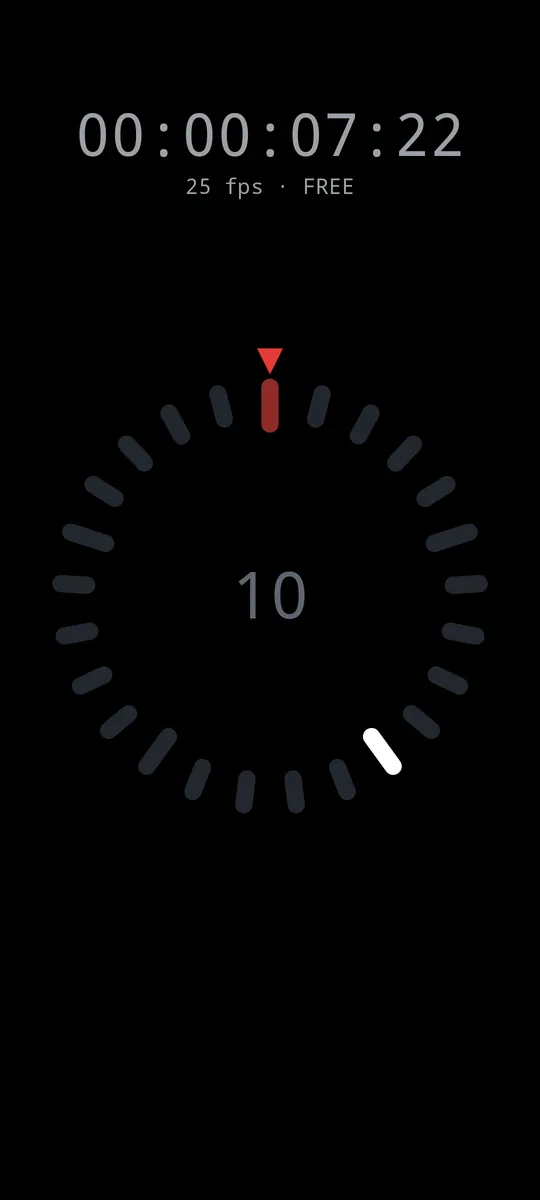
Generator at the start
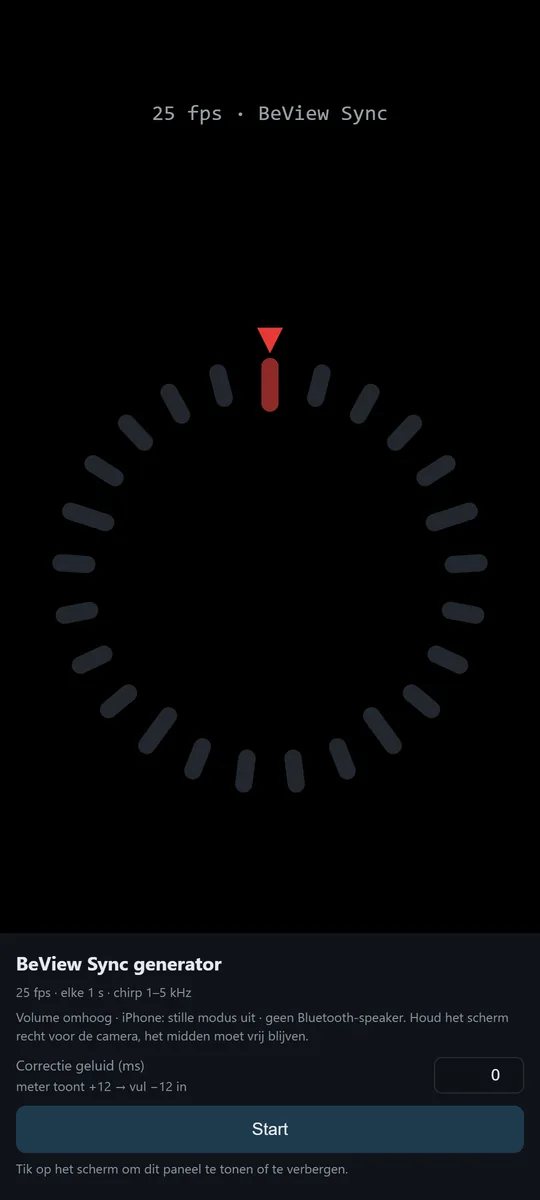
One phone sends a white flash and a chirp every second. Picture and sound start at exactly the same moment, thanks to the audio hardware timestamp. Film it with your camera or feed it straight into the chain.
 BeView Sync
 · for broadcast & live production
Is the sound ahead of the picture, or behind it? BeView Sync tells you in seconds. One phone sends a flash and a beep, the other sees and hears what comes out at the end of your chain. No measurement case, no cables to a scope.
Three steps. Works on any chain: encoder, satellite, streaming, IP, a TV with a soundbar.
One phone sends a white flash and a chirp every second. Picture and sound start at exactly the same moment, thanks to the audio hardware timestamp. Film it with your camera or feed it straight into the chain.
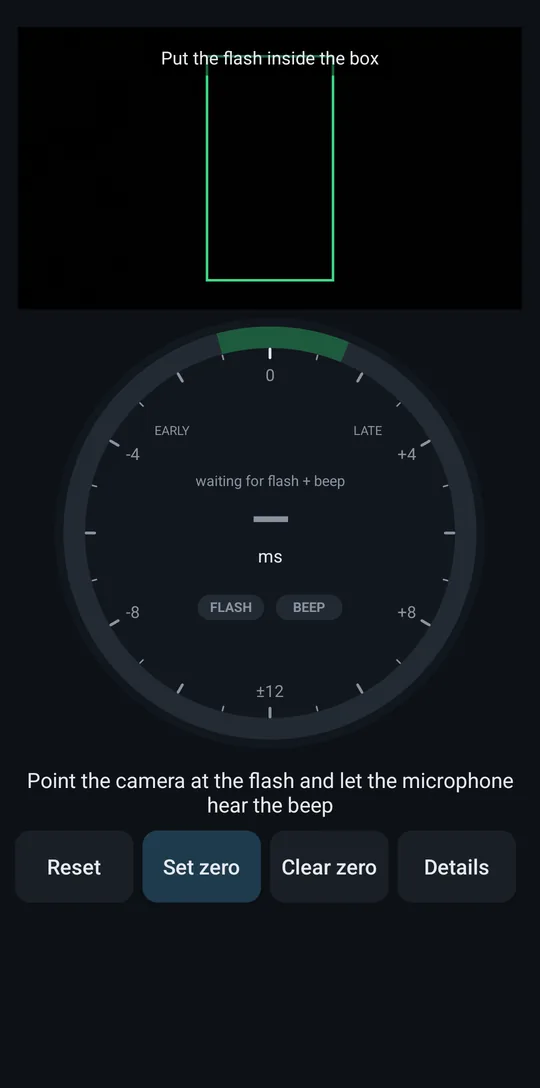
Point the second phone at the monitor at the end of the chain. The camera sees the flash, the microphone hears the chirp, both on one and the same clock.
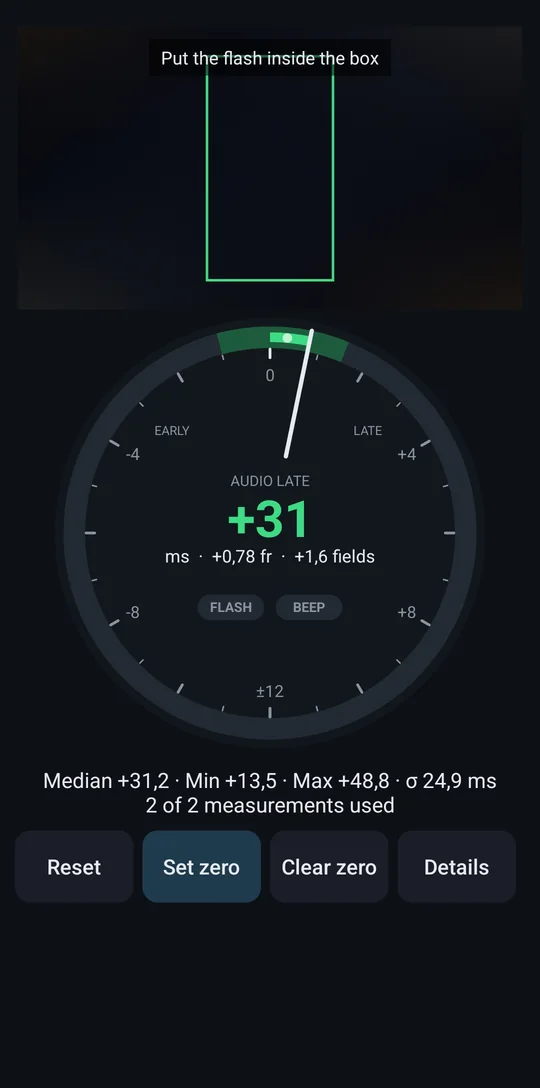
The round dial shows whether the sound is early or late, in milliseconds, frames and fields. Green means within EBU R37. Median and spread over the last 20 measurements.
With Share generator link in the app you send a link via WhatsApp to whoever is at the camera. It opens the generator in the browser, with exactly your settings. Tap Start, hold the screen in front of the camera, and measure.
Lip-sync tells you whether picture and sound are aligned. But how long are they on their way? And how far behind is the sound between two locations? BeView Sync has two more methods for that, both based on shared time: NTP, the internet clock that puts both phones within a few milliseconds of each other.
How much time passes between picture and sound going into the chain and coming out? With satellite, streaming or cloud production that is easily several seconds. NTP and a QR code measure it precisely, also beyond 5 seconds.
time.google.com by default) and measure how accurate it is.Commentary lines, remote production, intercom, audio over IP: how far behind is the sound between location A and location B? BeView Sync sends LTC timecode carrying the real time, and measures the delay 25 times per second at the other end.
LTC (Linear Timecode, SMPTE/EBU) is the broadcast world's standard timecode, carried as an audio signal. Every frame holds hours, minutes, seconds and frames. Because it is just audio, it passes through any audio link.
Camera and microphone on one clock. An exposure of exactly one frame and sub-frame flash detection give a spread below one millisecond.
Hold the phone in front of a mirror: it measures its own screen and speaker delay and corrects for it from then on.
NTP and a QR code on screen: not just lip-sync, but how long picture and sound are on their way. Read more
LTC timecode locked to UTC. Generator at location A, reader at location B: the audio delay 25 times per second. Read more
One generator listens to the other and then runs in lock-step, including the clock difference between the devices.
The app reads what the camera can do and picks a frame rate that is flicker-free under 50 Hz light. No guessing.
Download the app for free for Android (10 or newer) and try it for 10 measurements. After that you need a license: request a license.
Open the file on your phone and allow installing from this source. Each download is logged (IP address, country and device type) so we can count downloads; IP addresses are shortened after 30 days. See the privacy statement.
BeView Sync is a personal project. We do our best to measure as accurately as possible, but give no guarantee of 100% accuracy. Terms